Borrowed platforms
A feed you don't own decides who hears the sermon. Platforms matter more than we ever considered, and most churches and creators don't own theirs.
Trellis helps churches and creators build faithful, helpful, Biblical content: shows that support the people making them and serve the people listening.
A podcast system built from the ground up: the plan, the routines that carry it, one workspace to hold it, and people around you while it grows.
The way Christian media got made is coming to an end. What replaces it will be built on different ground.
A feed you don't own decides who hears the sermon. Platforms matter more than we ever considered, and most churches and creators don't own theirs.
A volunteer with a laptop holds the whole show together. The pace breaks the maker before it builds the audience.
Made to keep up with a calendar, not to serve anyone. People can tell, and they leave before the message lands.
Strategy first, then the systems that carry it, then software to hold it, then support so it keeps growing. Each stage rests on the one before it.
Where the show is going, who it serves, and why. Built with a coach before anything gets made.
02The routines that turn the plan into episodes: season arc, pipeline, shoot-day packets, promo cadence.
03One workspace for the whole show, so nothing is retyped and nothing lives in someone's head.
04A coach, and a room of churches and creators building the same thing on the same calendar.
Every show on Trellis starts the same way: naming what it's moving from, and what it's building toward.
A staff that never signed up to be a media team. Trellis gives the show a plan, a pipeline, a platform you own, and a person to call.
Apply for your church →A faithful voice building something that lasts. Trellis gives you the strategy, the systems, and a room of creators building the same thing.
Apply as a creator →Five minutes to tell us about the show and the problem. Eric reads every application and books a short fit call if it's a match.
Prefer email? eric@trellis.fm
Your show is spread across seven apps, and it still isn't growing. Trellis gives you the software, the support, and the coaching to change that, in one place.
A show doesn't grow because you bought better gear, or one more app. It grows when the software, the support, and the coaching finally pull in the same direction.
Most tools sell you one more app and wish you luck. Trellis starts with the plan, builds the routines, gives them a place to live, and keeps people around while the show climbs.
Where the show is going and why. Built with a coach from your numbers, written on the board before anything gets made.
See coaching → 02The routines that turn the plan into episodes: the season arc, the pipeline, the shoot-day packets, the promo cadence.
See the system → 03One workspace for the whole show. Plan, produce, promote, and grow from one login, with nothing retyped.
See the software → 04A small room of hosts in your vertical, a thread where the questions go, and a shoot-day system that does the producer's job for you.
See the cohorts →A board on its own gets tidy and then goes quiet. Give it something to climb, a plan, a room, and someone reading the numbers every week, and the same board starts compounding.
| Software alone | Trellis | |
|---|---|---|
| The plan for the season | Yours to invent | Built with a coach, on the board |
| Your numbers | A dashboard you open sometimes | Read on every call, with next moves |
| When you get stuck | A help doc | A thread with hosts in your vertical, and a coach |
| Accountability | A reminder you can dismiss | A weekly call with your name on it |
| The pile of apps | Still there, plus one | Gone. One workspace, nothing retyped |
| After the season | A subscription | A seat that stays, and a room that stays open |
The software is the frame. Coaching or a cohort is the support your show climbs on, and which one you choose decides who's building it with you.
 Photo · One-to-one call, numbers on screen
Forty-five minutes on your show with Eric, every other week. Your numbers, read. Your next three moves, on the board. The software included.
See coaching → Photo · A cohort call, six shows on screen
Twelve weeks with a small room of shows from your vertical, weekly calls, a thread for the questions in between. The software included, and the seat stays.
See the cohorts →Both include the software and the fit call. The difference is pace, how hands-on it is, and what it costs.
| Coaching | Cohort | |
|---|---|---|
| Pace | Faster. Your show is the only thing on the call. | A season. Twelve weeks, one stage at a time, with the room. |
| How hands-on | One-to-one with Eric, every other week. Your numbers, your board, your next three moves. | Weekly group calls with a coach in the room. Your show gets worked on, alongside the others. |
| Who's in the room | You and Eric. | Six to ten shows from your vertical, and a thread that stays open after. |
| Cost | Higher. You're buying the time. | Lower per seat. You're sharing the coach and gaining the room. |
| Between sessions | Questions go on the episode thread; Eric answers. | Questions go to the room first; the coach weighs in. |
| Best fit if | You have a specific wall and want it worked through now, with full attention. | You want company, a calendar, and shows like yours to compare notes with. |
Not sure? Pick "not sure yet" on the application. The fit call sorts it out, and pricing for your path is shared there.
Tell us about the show and the problem
Software, support, and coaching, together
A season that compounds instead of resets
1. Apply → 2. Climb → 3. Grow
Eric walks the whole system in one take: the workspace from plan to publish, and how the cohort fits around it.
The same episode retyped into five places. Stats nobody opens. Briefs you can't find on taping day. A season that ends where it started.
Software that holds the show, support when you're stuck, a coach who has read your numbers, and hosts beside you climbing the same wall.
Every tool made sense when you added it. Together, they are the problem: the same episode retyped into five places, stats nobody opens, briefs nobody can find on taping day. Trellis replaces the pile.
Sketch of the pipeline board · real screens replace this at launch
Strategy, research chat, guest intake, and one-click shoot-day packets.
The episode pipeline: boards that bend to your workflow, seasons, subtasks, assignments.
Episode emails, clip queue, guesting pitches, and a partnership tracker that isn't in your head.
Analytics across Apple, Spotify, and YouTube, plain-English insights, the Growth Library.
Every hour spent moving information between apps is an hour the show didn't grow. The workspace exists so the only thing you retype is nothing: the brief, the board, the email, and the report all read from the same episode.
It's built by someone who has run taping days with a binder of printouts, and would rather nobody else had to.
These ship in the box on day one, for every seat in the program.
Short, practical lessons: titles, cold opens, the first sponsor. Each ends in actions you ship this week.
Briefs, producer notes, and tech rundowns compiled from your live board in one click.
Brainstorms episode ideas against your strategy and your top performers, not generic prompts.
Announcement, story-first, or digest copy written from real episode data. A/B subjects included.
Get booked on other shows with pitches built from your blueprint and your real numbers.
Sponsors, cross-promos, and affiliates with statuses and next steps.
Rename columns, invent statuses, add text, status, and date fields. Your workflow, not ours.
Ask about your pipeline, tasks, or numbers in plain English, from anywhere in the app.
Pick coaching or a cohort
Twenty minutes with Eric
The workspace comes with your seat
1. Apply → 2. Fit call → 3. Log in
Trellis is three things working together: the software that holds the show, the support of a small room of hosts in your vertical, and coaching from someone who has shipped seasons. You don't buy the software. You join the system, and the software comes with it.
 Photo · Eric on a cohort call
The software is the frame. Coaching or a cohort is the support the show climbs on.
 Photo · One-to-one call, numbers on screen
Forty-five minutes on your show, every other week, one-to-one with Eric. Bring your numbers, leave with the next three moves. The workspace is included for the length of the engagement.
See coaching → Photo · Cohort kickoff, one vertical per room
A small room of hosts from the same vertical, working the same problems on the same calendar. Twelve weeks, weekly calls, a thread for the questions in between, and a software seat that stays after the cohort ends.
See the cohorts →Both include the software and the fit call. The difference is pace, how hands-on it is, and what it costs.
| Coaching | Cohort | |
|---|---|---|
| Pace | Faster. Your show is the only thing on the call. | A season. Twelve weeks, one stage at a time, with the room. |
| How hands-on | One-to-one with Eric, every other week. Your numbers, your board, your next three moves. | Weekly group calls with a coach in the room. Your show gets worked on, alongside the others. |
| Who's in the room | You and Eric. | Six to ten shows from your vertical, and a thread that stays open after. |
| Cost | Higher. You're buying the time. | Lower per seat. You're sharing the coach and gaining the room. |
| Between sessions | Questions go on the episode thread; Eric answers. | Questions go to the room first; the coach weighs in. |
| Best fit if | You have a specific wall and want it worked through now, with full attention. | You want company, a calendar, and shows like yours to compare notes with. |
Not sure? Pick "not sure yet" on the application. The fit call sorts it out, and pricing for your path is shared there.
There's no public price table, on purpose. The right path depends on the show, so cost is set per program and shared on the fit call.
Five minutes. Tell us about the show, the vertical, and the thing that's stuck. Eric reads every application.
Twenty minutes to hear the honest read: coaching, a cohort, or not yet. Pricing for your path is shared here.
A seat, a start date, and a workspace login the same day. Founding members lock their rate for as long as they stay.
Plan, produce, promote, grow. Every module, one login.
Weekly in a cohort, every other week in coaching.
Every lesson, with the actions to ship this week.
Briefs, producer notes, and rundowns from the board.
A thread for the question that can't wait until next week.
Early members keep their rate as long as they stay.
Pick your support, tell us the problem
The honest read, and the price
Software, support, coaching
1. Apply → 2. Fit call → 3. Climb
One-to-one with Eric. Bring your numbers, leave with the next three moves. The workspace is included for the length of the engagement, and the notes from every call live on the episode they're about.
The workspace does this for you. Eric reads them first.
One problem, worked to a decision. No slides.
Written on the board, assigned, dated.
Questions go on the episode thread, not into a DM.
Before → The call → Three moves → You ship
If you haven't recorded yet, a cohort is almost always the better support. The fit call will say so.
 Photo · Notes on the board after a call
Quote from a coached host about the first call where the numbers finally made sense.
— Host, show name · pilot, quote pending
A show, a host, and a to-do list nobody else can see. Every problem solved from scratch, because nobody in your vertical is comparing notes.
Six to ten shows from the same vertical, on the same calendar, with the same coach and the same board. The problems repeat. The answers compound.
Five minutes, then a twenty-minute fit call
→Logins, the board, one problem per show
→Strategy, research, the season arc
→Batch days, packets, the pipeline running
→Emails, clips, pitches, first partnerships
→The seat stays. So does the room.
Swipe →
Every seat in the room is working the same problem, so the calls stay specific. The first verticals are being finalized. The cards below are the frame they'll fill.
Who it's for goes here, in one sentence.
Who it's for goes here, in one sentence.
Tell us on the application. Cohorts open where the applications cluster, and coaching covers the gap until then.
Apply anywaySixty minutes, one vertical, one problem at a time.
A full seat from kickoff, and it stays after week twelve.
Every lesson, sequenced to the twelve weeks.
Briefs, producer notes, rundowns from the board.
A thread with the other shows, open after the cohort ends.
The first cohort in each vertical locks its rate.
There's no public price table because the right cohort depends on the show. What we can say now: the workspace is included, there's no separate software bill, and the founding cohort in each vertical keeps its rate for as long as it stays.
Trellis is built by Eric Randall, a producer who has run taping days, shipped seasons, and watched good shows stall for reasons that had nothing to do with talent. The system is the thing he wished existed on those days.
 Portrait · Eric, in the studio
A host retyping the guest's bio for the fourth time. Hunting for the brief ten minutes before the taping. Promo that never went out, because nothing reminded anyone.
None of that is the work. Trellis exists so the work is the only thing left.
Printouts on taping day. A spreadsheet of downloads nobody trusted. The same show described three different ways in three different tools. We built the workspace on those days, for those days.
Better gear never fixed a show that couldn't find its own brief.
It takes the software, the support, and the coaching together. Selling a host one more app is how they got here.
Stubs say they're stubs. Numbers are numbers. If a path isn't right for you, the fit call says so.
 Portrait
 Portrait · to come
 Portrait · to come
 Portrait · to come
 Photo · The studio, Oklahoma City
The studio is in OKC. The cohorts are on a video call, so the room is wherever the shows are.
The new year is when listeners go looking for new shows and content. Let's plan your 2027 content and launch now, so they find a show that's ready for them.
New routines, new commutes, new resolutions. Every year a wave of listeners arrives in the first weeks of the year looking for something worth their time. The shows that grow are the ones that were ready before they got there.
The surge starts the first week of January and settles by February. A show that's still deciding what it's about in the new year misses most of it.
Holidays, travel, and a church calendar that's already full. If the plan isn't set by November, the episodes won't be recorded in time to launch with it.
A listener who finds a planned season keeps listening. One who finds a gap, an old episode, or a vague promise moves on and doesn't come back.
Can someone tell what your show is about in one sentence, and know if it's for them?
Are your episodes about what your audience is actually searching for right now?
What gives listeners something to join this season, and gives the show momentum?
Whose audience could you be borrowing, and why aren't you yet?
Does what you make keep working after it airs, or does growth reset every week?
Your show has been going a while and the numbers have flattened. You want 2027 to be the year it grows on purpose.
You've been meaning to start the show. The new year is the best time to do it, if the plan is set this fall.
A staff that never signed up to be a media team, and a feed that could be so much more than Sunday's audio.
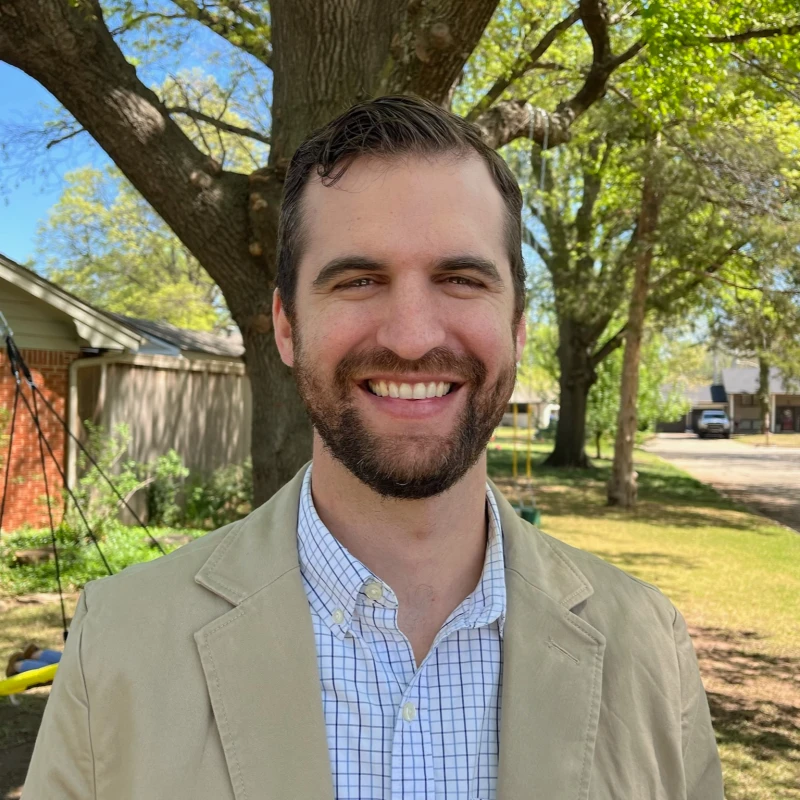 Portrait · Eric
I've spent years behind whiteboards and production consoles: launching podcasts, directing livestreams, and building content teams for churches, founders, and organizations that would rather be trusted than trending.
Today I work two ways. For ongoing shows, I own the strategy and production for a season so the show ships every month. For one-off projects, I show up, produce the thing, and hand it back better than I found it.
Either way, the job is the same: make the people you serve trust you more, not just notice you.
Free, live, online. Bring your show. You'll leave with a finished worksheet, and if you register and can't make it, you'll get the recording.
The registration link is coming soon. Leave your email and we'll send it to you the moment it's live.
With Eric Randall as our podcast producer, we broke into the top ten of all Christian podcasts in the nation. Eric's creativity, tenacity, eye for detail, and innovative strategy helped take our podcast to new heights. On top of all that, he's a lot of FUN to work with! If you want to maximize your podcast's potential, then get Eric Randall on your team.
Eric is exactly what you would hope for. He is full of ideas and encouragement. It's clear he has the competence and care to provide incredible value through his time. He has helped recharge and refocus our podcast.
Eric reads it, replies within a week, and books a twenty-minute fit call if it's a match.
The application form isn't wired up yet. This is a site frame. Nothing was sent anywhere. Until it's connected, email eric@trellis.fm with the show name and the problem.
Back to homeEric reads the application and listens to the show.
Twenty minutes: your problem, the honest read, the price.
A seat, a start date, and a workspace login the same day.
No spam. Cohort news and the occasional growth lesson.